

What 26 Years Around Alaska’s Bears Taught Me About Stewardship
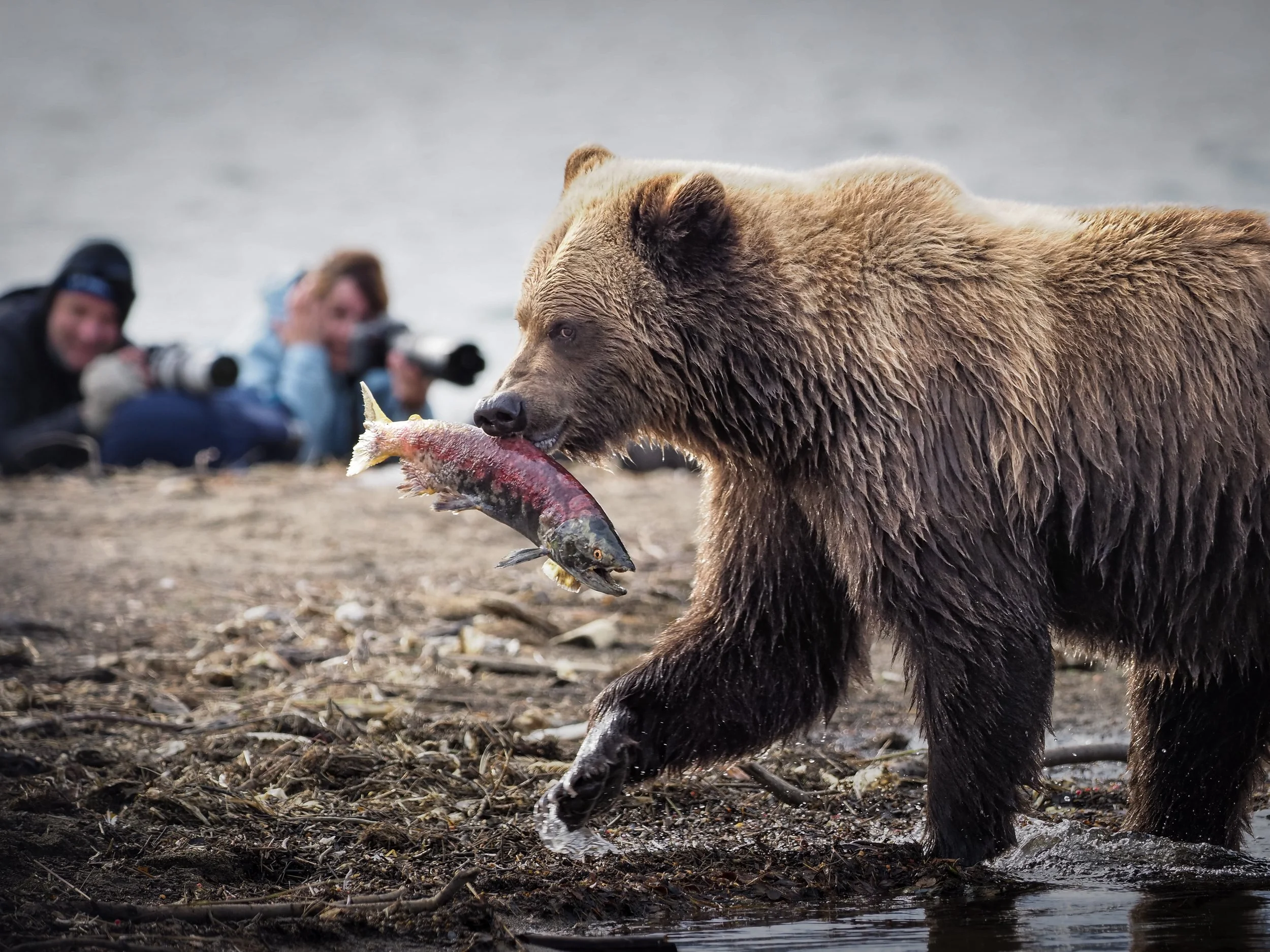
Seconds after the catch, a coastal brown bear moves past a line of photographers quietly documenting the moment.
For twenty-six years, brown bears have been the fixed point around which much of my life has revolved.
At eighteen years old, I stepped off a floatplane onto the shores of Naknek Lake, beginning my first job as a volunteer ranger at Brooks Falls in Katmai National Park and Preserve. Before I had even walked the short distance to meet my new supervisor, I found myself face to face with one of the largest bears in the ecosystem — a giant male named Sandler chasing after a female in estrus.
That moment changed the entire trajectory of my life.
Over the next two and a half decades, I built a life around Alaska’s bears along the fragile and vunerable Bear Coast.
Thousands upon thousands of hours spent watching the world’s largest land predators navigate a life far more nuanced, intelligent, and vulnerable than most people will ever understand.
And over all those years, I learned something uncomfortable.
There is no such thing as a permanently protected place.
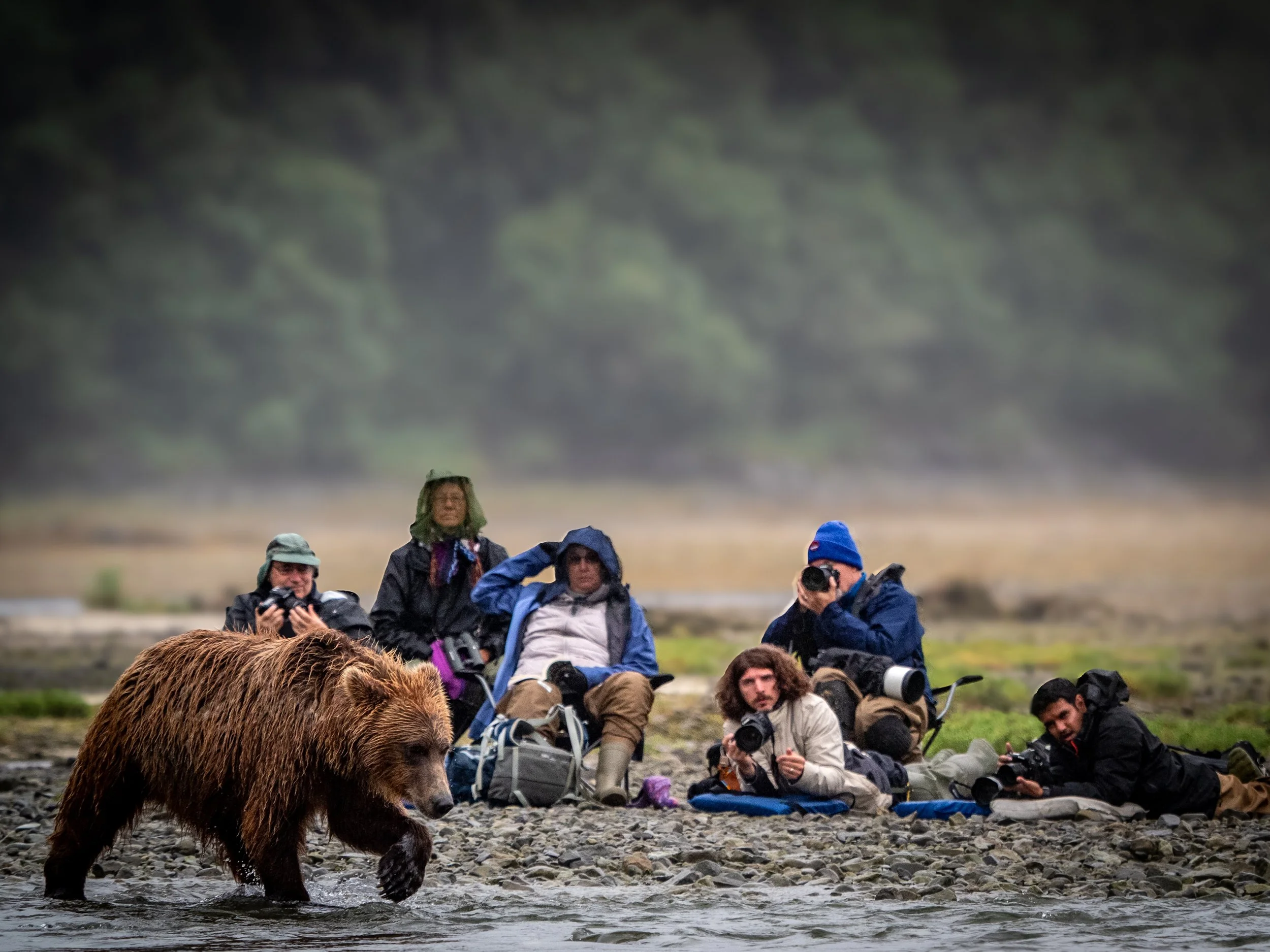
A coastal brown bear moves quietly through the river as photographers wait patiently, guests in a world that has always belonged to the bears.
We like to believe national parks represent permanence. We imagine wilderness as something secured. We convince ourselves that because a place has boundaries on a map, because tourists stand on viewing platforms holding cameras, because bears continue fishing waterfalls every July, that somehow these places are safe.
They are not.
I have watched too many battles unfold to believe that anymore.
Just a few short years ago, the fight over Pebble Mine became one of the clearest reminders that nowhere in Alaska is ever truly safe. One of the most important salmon ecosystems left on Earth — the very foundation supporting bears across Katmai, Bristol Bay, and much of Southwest Alaska — came dangerously close to being sacrificed for short-term extraction.
And more recently, I have watched Alaska continue down a path of wildlife management decisions that feel deeply disconnected from the places themselves.
The state’s predator control program in the Mulchatna region had led to the widespread killing of brown bears, including mothers with cubs, all in an effort to manipulate declining caribou populations.
Not because the science was there to prove that predator control was needed.
Because politics are at play.
I have spent enough time in Alaska to understand a truth that years in the field make impossible to ignore.
Wild places are extraordinarily delicate arrangements built over thousands of years.
Yet human beings can alter them with astonishing speed.
A single mine proposal.
A misguided wildlife policy.
One generation convinced it understands a landscape better than the forces that shaped it.
And suddenly places we assumed would exist forever begin changing in ways that cannot easily be undone.
I have watched versions of this story repeat over and over again.
And somewhere along the way, I realized something important.
Stewardship is not admiration.
It is participation.
It is easy to stand on the viewing platform at Brooks Falls and marvel at one of the greatest wildlife spectacles on Earth.
It is much harder to recognize that places like this only continue to exist because people before us fought relentlessly to protect them.
And because people after us will need to continue fighting long after we are gone.
That realization sits at the heart of why I built World Untouched Adventures.
Travel, at its best, should deepen connection.
But connection without responsibility is simply consumption.
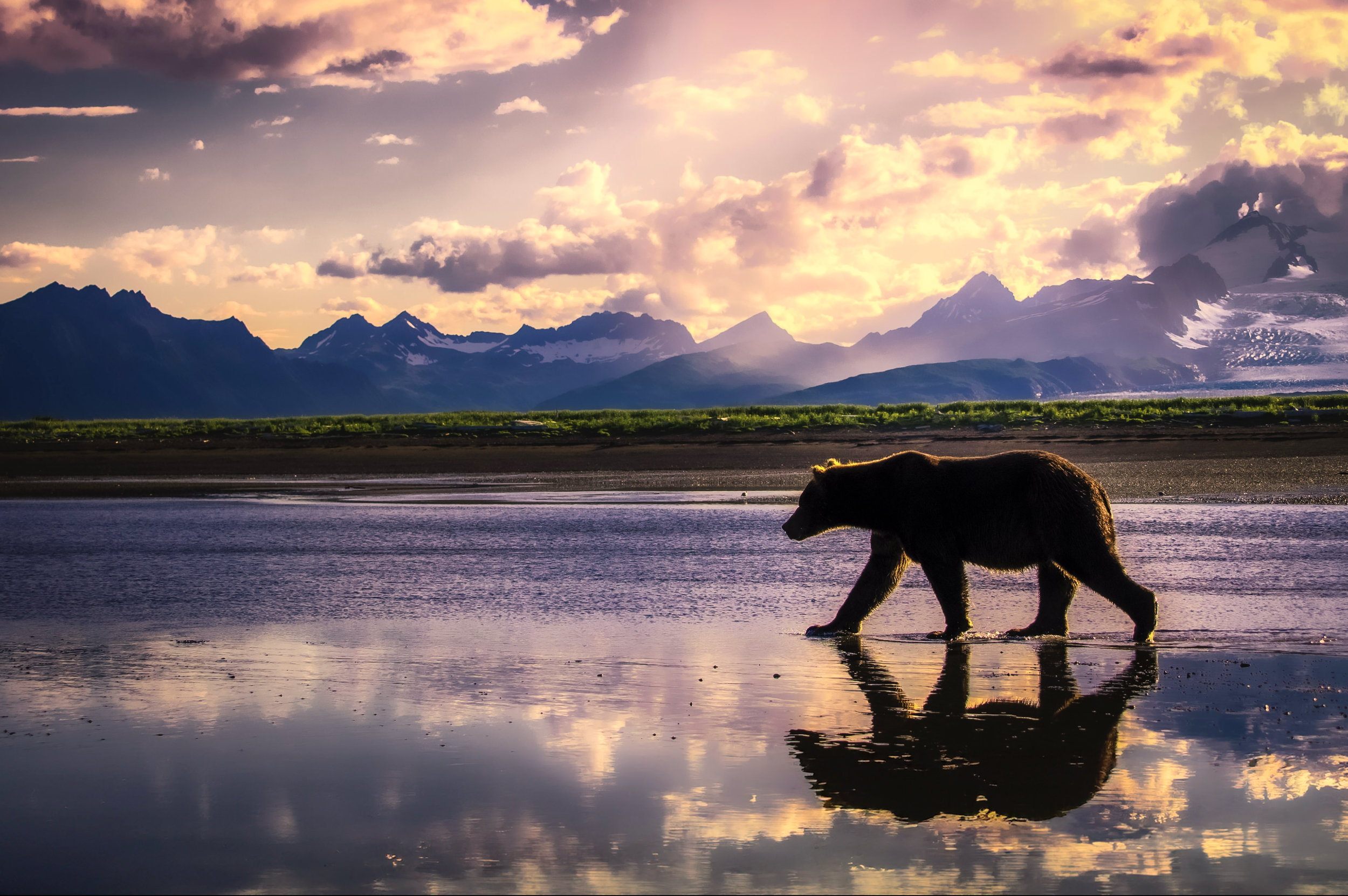
A solitary brown bear moves through the fading light as Alaska’s wildness reveals the scale and beauty that still remains worth protecting.
For too long, the travel industry has operated as though witnessing a place is enough.
It isn’t.
Seeing wild places without actively participating in their protection is no longer enough.
Which is why World Untouched has made the decision that all of our Alaska conservation efforts will now be directed exclusively toward the Alaska Wildlife Alliance.
Because protecting Alaska will not happen through isolated voices.
It will happen through organized resistance.
It will happen through communities, scientists, advocates, local residents, and ordinary people standing together against policies that threaten the places that make Alaska what it is.
The Alaska Wildlife Alliance has spent decades standing on the front lines of these battles.
And we believe their work represents exactly the kind of unified effort Alaska needs moving forward.
After twenty-six years in bear country, I have learned one lesson above all others.
Wild places do not survive simply because they are beautiful.
They survive because enough people decide they are worth defending.
The future of Alaska’s wilderness will not be determined by how much we admire it.
It will be determined by whether we are willing to fight for it.
And whether we understand that the work of stewardship is never finished.
— Justin Gibson
Founder, World Untouched Adventures